
Arrest History in Galveston County
The Galveston County Sheriff's Office makes arrests, runs the county jail, and keeps records for its own calls and investigations. It does not become the custodian of every police narrative merely because a city officer delivers a person to the jail. Galveston, League City, Texas City, Dickinson, La Marque, Friendswood, Santa Fe, Hitchcock, and Kemah police departments keep their own agency reports. Constables, Texas DPS Highway Patrol, UTMB Police, and Port of Galveston Police create more agency-specific records.
An arrest history can span an officer's event report, a jail booking, magistration and bond papers, a filed court case, and a DPS arrest cycle. These records do not appear at the same time or say the same thing. No current jail result does not prove no past booking occurred. No court case may mean the prosecutor has not filed, declined, or changed the matter. A narrow public DPS result also does not settle whether a local arrest exists.
Galveston County P2C Arrest Channels
GCSO's Police-to-Citizen system separates current custody from event activity. Inmate Inquiry searches the live jail population by last and first name. Arrest Search applies date and name filters when the active module offers them. Daily Bulletin acts as the official blotter-like view for recent incidents and arrests. These channels answer different questions, so a careful search may use all three.
The official P2C Arrest Search provides a direct route to arrest events without turning the page into a gallery of private people.
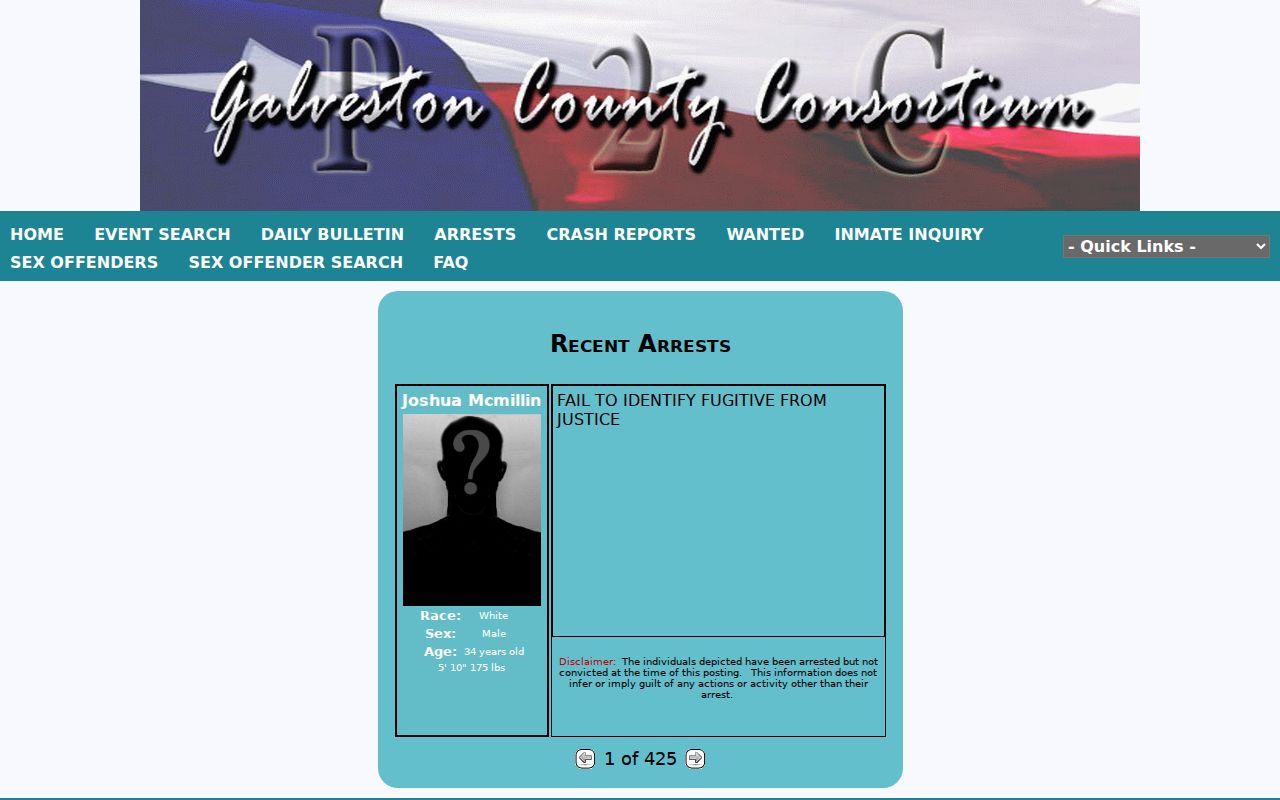
Record the event or booking number, agency, date, and initial charge from a relevant result. Those fields help the arresting agency and clerk trace the matching source records later.
How to Look Up Galveston County Arrests
Begin with the source closest to the event. For a recent jail admission, that is P2C and the jail. For an officer narrative, it is the department that made the arrest. For a filed charge and final outcome, it is the correct court clerk. The state repository adds a separate Texas layer, but its public product is not a full local arrest archive.
- Search GCSO P2C Inmate Inquiry by name, then review Arrest Search and Daily Bulletin for the event date. Save the booking or event number and arresting agency.
- Request the arrest or offense report from that agency. Use GCSO for sheriff events, but use the relevant city, constable, trooper, campus, or port custodian for its report.
- Search the Galveston County Odyssey Portal after filing time has passed and compare the filed charge and disposition with the booking allegation.
- Call the jail at (409) 766-2315 for identity or release clarification, or make a focused written request for an older booking sheet.
- For self-review, follow the Texas DPS personal-review process. The public DPS name search shows a narrower conviction and deferred-adjudication product.
If the needed record is a narrative, video, audio file, CAD entry, or old booking detail, submit a Texas Public Information Act request to the creating agency. Identify the event number, date and approximate time, place, names, desired format, and a narrow date range.
Galveston County Jail Booking Queue
GCSO describes a defined intake process. Jail staff first inspect the arresting officer's paperwork. An incomplete packet goes back for correction. A complete packet enters the booking queue, where staff ask identifying questions, take photographs, and usually collect fingerprints. A person who does not cooperate moves to the back of the queue so other bookings can proceed. That paperwork check helps explain why the officer's arrest time and final booking time may differ.
The official GCSO corrections account also explains release steps and the two free two-minute calls provided after booking.
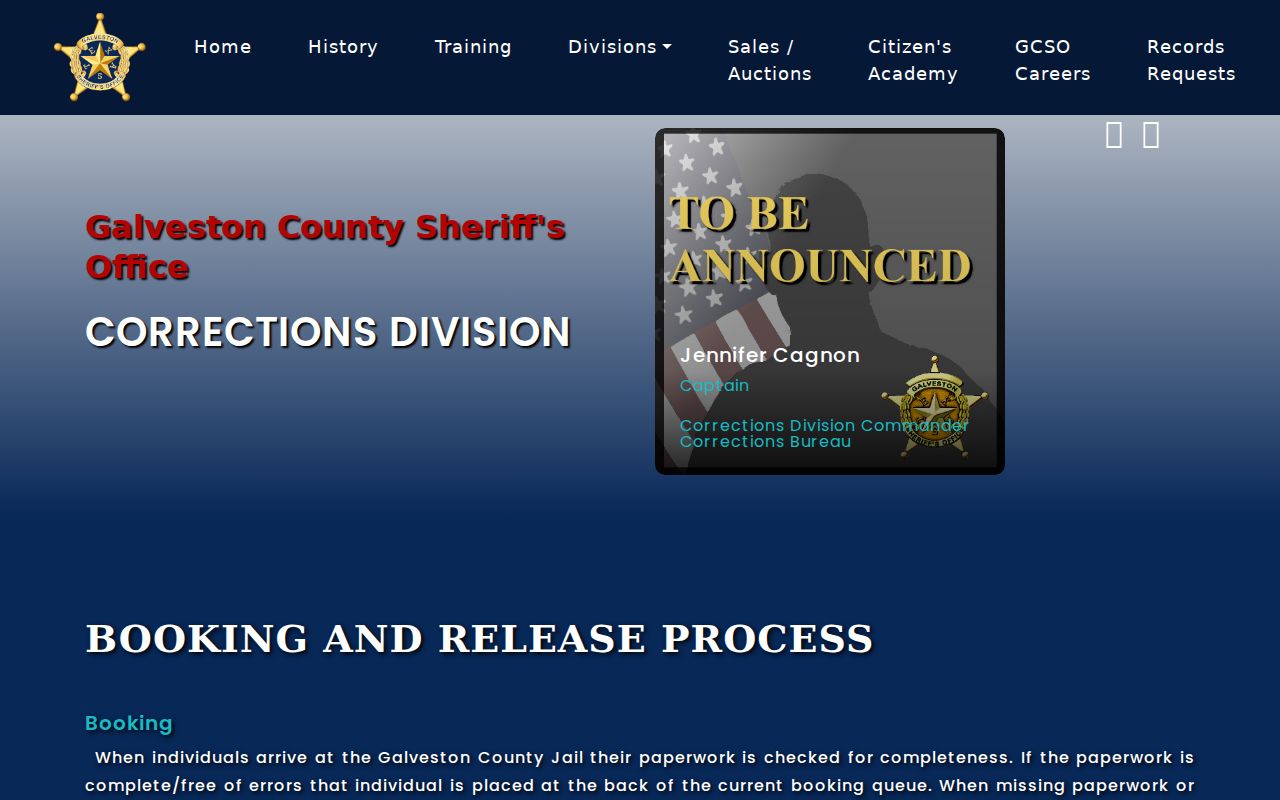
Payment does not place someone in the release queue until all bond or fine paperwork reaches the jail. Officers then recheck the documents and identity. The public custody view can therefore lag behind a family report that bond was paid.
What an Arrest Record Shows
The officer's report and the jail booking record overlap, but each adds distinct facts. The agency event can identify the arrest authority, place, officer or unit, alleged law violation, witnesses, evidence, and narrative. The jail adds intake details, initial charges, bonds or holds, magistration data, and release status. Public copies remove protected identifiers and sensitive victim, juvenile, medical, or investigative information where law requires it.
| Event / Booking Number | Links the agency event or jail intake to later requests and related records. |
|---|---|
| Arrest Date & Time | Shows when the arrest occurred; booking can happen later after paperwork review. |
| Arresting Agency | Identifies the office that holds the underlying offense or arrest narrative. |
| Initial Charges | Lists allegations at intake, which can differ from charges later filed in court. |
| Bond & Holds | Shows a custody snapshot; another case, hold, or pending release step can still block release. |
| Booking Photograph | May exist in the booking file, but release depends on the official custodian and applicable law. |
| Custody / Release Status | Shows current or recorded jail status, not a complete lifetime arrest history. |
Do not treat a public booking photograph or a listed charge as proof. The court file supplies the filed accusation and the disposition, and the initial charge may change before either appears.
Galveston County Arrest Agency Routes
The key local question is who created the report. Galveston County's island, mainland, port, highway, and campus geography produces many custodians. GCSO can supply its own offense records and county booking material, but not a complete League City or Galveston Police investigative file. A precise request sent to the right office is less likely to be delayed or returned.
| Agency | Official record route | Contact |
|---|---|---|
| Galveston County Sheriff | P2C and a focused request to GCSO | (409) 766-2300 |
| Galveston Police | City Public Records Center for police records | (409) 765-3702 nonemergency |
| League City Police | Records Management Unit and JustFOIA | (281) 332-2566 main |
| Texas City Police | Police Records Division | (409) 643-5818 |
| Constable Precinct 3 | Constable or issuing JP for its warrant records | (281) 316-8711 |
Other city police, DPS Highway Patrol, UTMB Police, and Port of Galveston Police should receive requests for the events they investigated. If a city arrest led to county detention, use that city for the report and GCSO for the booking.
Recent Arrests and Booking Logs
P2C Daily Bulletin is the county's official blotter-like channel for recent activity. It can show an incident or arrest before a prosecutor files a case, and some bulletin events never become prosecutions. The date view is useful during coastal events or other busy periods when several agencies send people through the county booking process.
The Galveston County Daily Bulletin presents recent activity separately from the live jail roster.
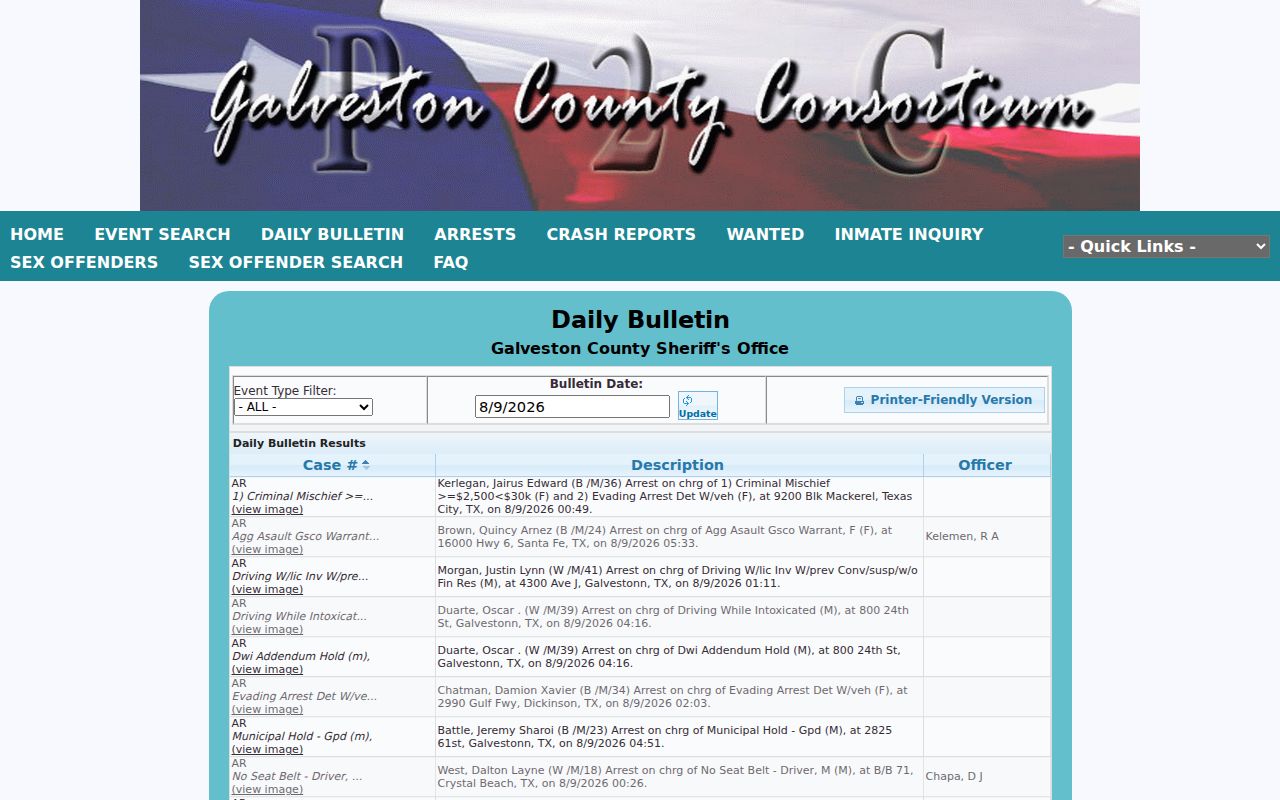
A bulletin row is a lead, not a final result. Save the agency and event number, then seek the officer report and later court record. Entries can roll out of recent views, while an acquittal, dismissal, or conviction may occur months after the event.
When Galveston County Custody Looks Stale
A reported bond payment and a P2C “in custody” result can both be accurate at different points in the release process. GCSO waits for all payment and paperwork before adding the person to the release queue. Staff then verify the documents and identity. Multiple cases, other holds, or incomplete paperwork may also prevent release after one bond line is paid.
The official P2C Inmate Inquiry is the first current-custody check.
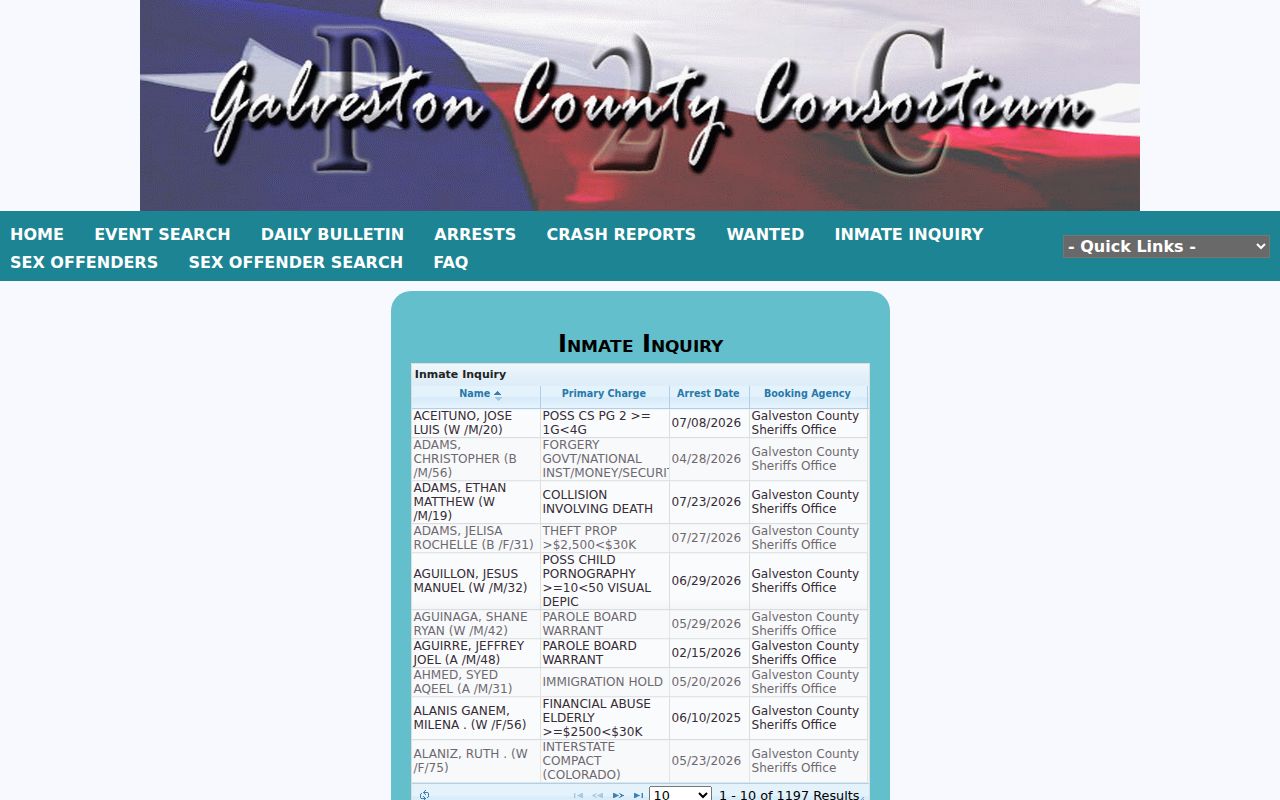
Call the 24-hour jail line when identity or release timing remains unclear. For a sentenced person transferred to state custody, switch to TDCJ Online Inmate Search. Texas VINE can supply custody-status notifications, but it does not replace the sheriff's booking record or the court judgment.
Note: A live jail roster reflects current custody and can change before an older Galveston County booking sheet or court file does.
Arrests vs Convictions
An arrest record documents law-enforcement action and, when applicable, jail intake. A conviction is a court judgment of guilt. Different custodians create the two records, and the later court charge can differ from the arrest allegation. Check both before describing an outcome. A dismissed case may leave a historic booking record unless a person obtains relief under Texas expunction law.
| Point | Arrest Record | Conviction Record |
|---|---|---|
| Creator | Arresting agency and jail | Court and clerk, later reported to DPS |
| Meaning | An arrest or booking occurred | The court entered a judgment of guilt |
| Local source | Agency report, P2C, or booking sheet | District, county, municipal, or justice clerk |
| Possible end | Release, no filing, or a later case | Sentence, appeal, or post-case relief |
Note: An arrest is not proof of guilt, and a booking may end with no filed charge, dismissal, or acquittal.
Galveston Arrest Records Reach DPS
When Galveston County Jail books a person, fingerprints and arrest-event data move through Texas law-enforcement systems to the Texas Department of Public Safety. DPS associates that event with the subject's state identification record. If prosecutors file a charge, the proper clerk creates the court case. Courts and clerks later report a dismissal, deferred adjudication, conviction, acquittal, or other disposition to DPS.
Record flow: Arresting Agency › Galveston County Booking › DPS Arrest Cycle › Prosecutor Review › Court Disposition › DPS Update
That chain creates timing gaps. A new booking may appear before the court case, and an old DPS cycle may be missing the latest court outcome. For one's own record, obtain a certified disposition from the clerk and follow DPS review and challenge instructions. The Galveston County criminal case records are the source for filed charges, judgments, and dismissals.
Galveston County Sheriff's Office
601 54th Street
Galveston, TX 77551
(409) 766-2300
Call to confirm record cost and delivery.
A written request should seek an existing record, not ask staff to create an explanation. Active-investigation and confidentiality rules may support withholding or redaction, and the Attorney General decision deadline is not a promise of production within ten business days.